1948 -
Celebrating over 70 years of Safe Boating Education through
volunteer excellance
BOATING
COURSES 2020 When available
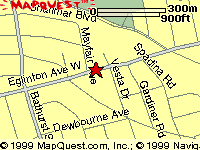
in-class instruction will be held at Forest Hill Collegiate Institute
(Unless On-Line or specified) 730 Eglinton Ave West (East of Bathurst)Location:MAP All courses
7 - 9:20 pm unless specified
VISIT OUR NATIONAL
BOATINGCOURSES.CA FOR ALL
AVAILABLE COURSES IN YOUR AREA
On-line secure registration and
payment now available for all courses
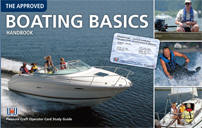
Boating1-Boating
Basics
The
Pleasure Craft Operator Card Course
Coming Fall 2020
for 3 consecutive Tuesday evenings from 7pm to 9:20pm
A minimum of 7 students are required to run this course
All operators of
motorized pleasure craft are required to show proof of operator
competency.
To get your Pleasure Craft Operator Card (PCOC), you need to write a
test approved by Transport Canada.
All you need to know for your test is presented by knowledgeable
instructors in an easy format that is both informative and
entertaining. You can be confident in knowing that this course meets
all the standards established by Transport Canada’s
Office of Boating Safety.
On successful passing the exam offered by
Canadian Power & Sail Squadrons, your Card is recognized by BOTH
Transport Canada and The National Association of State Boating Law
Administrators (USA).
This course qualifies for membership in
the Canadian Power and Sail Squadron organization
COST:
MEMBERS $ 90.00
NON MEMBERS $ 95.00
Now available in E-Book version at a $5 discount
This course may be taken on-line at
www.cps-ecp.ca
for $49.95
Call Peter
Frost at 416/571/0038 for more information or
assistance
Boating 2 - Beyond PCOC
Boating
4
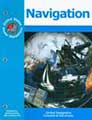
Near Shore Marine Navigation Level 1
Formerly:
Seamanship
To be
Announced
A minimum of 7 students are required to run this course.
Recommended Prerequisite: Introduction
to Navigation or you must have a practical knowledge
of paper chart navigation as determined by the Toronto
Squadron Training Officer.
Please contact SEO
Peter Frost 416/571/0038
The Boating 4 Course (Seamanship) builds on
"Boating 3 - Introduction to Navigation"
Seamanship uses traditional navigation, GPS fixes, Way Points,
along with the introduction of Deviation, in the three homework
cruises, and the examination take home cruises.
This course offers: interpretation of charts, the DR plot,
bearings, fixes, running fixes, Collision Regulations, and plotting
and labeling in True and Magnetic.
Seamanship explains the hazards of weather, wind, waves, tides,
and tidal currents and how to deal with them. When unforeseen
circumstances arise such as man-overboard or medical emergencies,
the seamanship course helps the student to acquire the skills to
deal with life-threatening situations.
Cost:
MEMBERS $ 170.00
NON MEMBERS $
195.00 With approval from STO
Plus: This course does not include materials
obtained in the previous courses. An approximate $54.00
may be required to obtain some or all of these materials.
Registration On-Line( WHEN DATES CONFIRMED)
OR CALL PETER FROST 416/571/0038
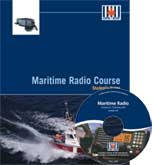
Maritime
Radio Course - with DSC
* FOR DSC
UPGRADE ONLY SEE COURSE BELOW
Self Study
This course is an integrated version of the classroom
course. Students will receive online the study guide and
support materials. The course is open for 60 days from
registration.
If possible, the exam will be held in person with a
Recognized CPS-ECP Examiner.During the COVID-19
pandemic, the exam will be held via a video link.
Cost is $100 for both CPS-ECP members and non
Cost: MEMBERS and
NON MEMBERS
$ 100.00
*Digital Selective
Calling Upgrade Can be taken in conjunction with the VHF course
above Call to enquire
Call Peter Frost for more information 416/571/0038
This course is for holders of
Restricted Operator Certificate (Maritime) issued before
January 1st 2005. Learn about the new Digital communication
channels on new Maritime radios and their use in an
emergency situation. Digital Selective Calling could save
your life in an emergency situation.
Cost: MEMBERS
$ 100.00 NON MEMBERS
$ 100.00
Boating 7
Off Shore Marine Navigation Level 2
Formerly – Global
Navigation
Use the stars to
find your way.This is the
second of a
two-course program
of Offshore
Navigation program
for the recreational
boater. It
introduces the
navigator to route
planning for going
offshore, may the
voyage be long or
short.While
overshadowed by the
new electronic
systems, the art and
science of celestial
navigation is still
a valuable asset to
the offshore
boaters. This
course provides the
student with the
fundamental
knowledge and
practical skills of
celestial
navigation. It
involves the use of
a sextant for taking
sights on the sun,
planets, moon, and
stars.
The course will be
delivered via
GoToMeeting, a
technique enabling
you to take the
course on-line in
the comfort of your
own home using a PC
or tablet device
capable of accessing
the Internet.
Cost: MEMBERS $ 280.00
NON MEMBERS $ 305.00
Registration On-Line
For more information
contact Tony
Gardiner
416/483/5209
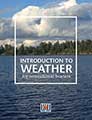
Introduction of Weather
for Recreational Boaters
FALL 2020
FOR STUDENT ENQUIRIES CONTACTJONI ALEXANDER
416/482/4279
Winds, waves, fog, lightning, hail, tornadoes
.... hurricanes! The wise boater respects and
anticipates mother nature’s many moods.
Beyond “red sky in the morning”, this course
provides boaters with the tools to find and accurately
interpret weather reports and forecasts, and to develop
keen judgments in “reading” the sky and sea for optimum
boating safety in and around Canadian waters. Newly
developed for adult learners, this course will measure
learning success not by closed-book, memory-work exams,
but by practical, open-book applications of learned
concepts to actual boating situations.
Topics:
1. The Atmosphere, Temperature, Heat
2. Wind, Pressure, Waves
3. Water, Humidity, Fog, Precipitation
4. Stability, Clouds
5. Thunderstorms and Tornadoes
6. Mid-Latitude Weather and Storms
7. Overview of Special Topics: e.g. hurricanes
Cost: Not Available here at this time.
The Weather course is presented by Joni
Alexander, JN, who says of her experience:
" I've been
sailing, mainly on Lake Ontario, for over 20 years and have been a
CPS member since 1990. I have been teaching as a part-time
occupation for over 30 years and teaching CPS courses-- Boating and
Weather-- for about 5 years. My special interest is weather and the
picture is me checking on the weather observation buoy located
between Toronto and Niagara! "
NOT AVAILABLE FROM US AT THIS TIME
PLEASE GO TO THE
CPS-ECP WEBSITE FOR A COURSE OFFERING NEAR YOU
A minimum of 7 students are required to run this course. You
will be notified within 2 weeks of start of course.
Recommended Prerequisite: Piloting or Seamanship
Knowledge of the basics of navigation and
planning cruises on a maritime chart is just the start.
Expand that knowledge by using a variety of electronic
devices to chart your course and enable you to plan your
course under tidal, current and windy conditions. By
learning more about dead reckoning, fixes and running fixes
you will have attained a high degree of proficiency in
navigating through coastal waters.
In the CPS AP Course we cover GPS, Chart
Plotters, Radar, SONAR, Autopilots and more.
Cost: $ 150.00 Members
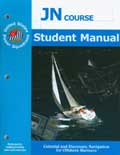
Junior Navigator
NOT AVAILABLE FROM US AT THIS TIME - PLEASE GO TO
THE CPS-ECP WEBSITE
FOR A COURSE OFFERING NEAR YOU
Call Peter Frost for more information
416/571/0038
When the GPS ceases to work, be guided by the sun.
This is the first of a two-course program of
Offshore Navigation for the recreational boater.
Learn to use a marine sextant to derive lines of
position and a running fix from sights on the sun.
When you are boating offshore, remember that GPS is
not infallible, nor always available. Be confident
when no aids to navigation or land objects are in
sight.
This course will be
available through 'Go To Meeting' by Past Chief
Commander Tony Gardiner with some in class instruction
for clarification of the more difficult course
information. Time and week night to be determined by
class participants.
$175.00 Member
$200.00 Non-member
VISIT THE NEWLY DESIGNED NATIONAL WEBSITE
You may now register and pay for all of our
courses at the national site
Canadian Power & Sail Squadrons



 Boating
4
Boating
4